
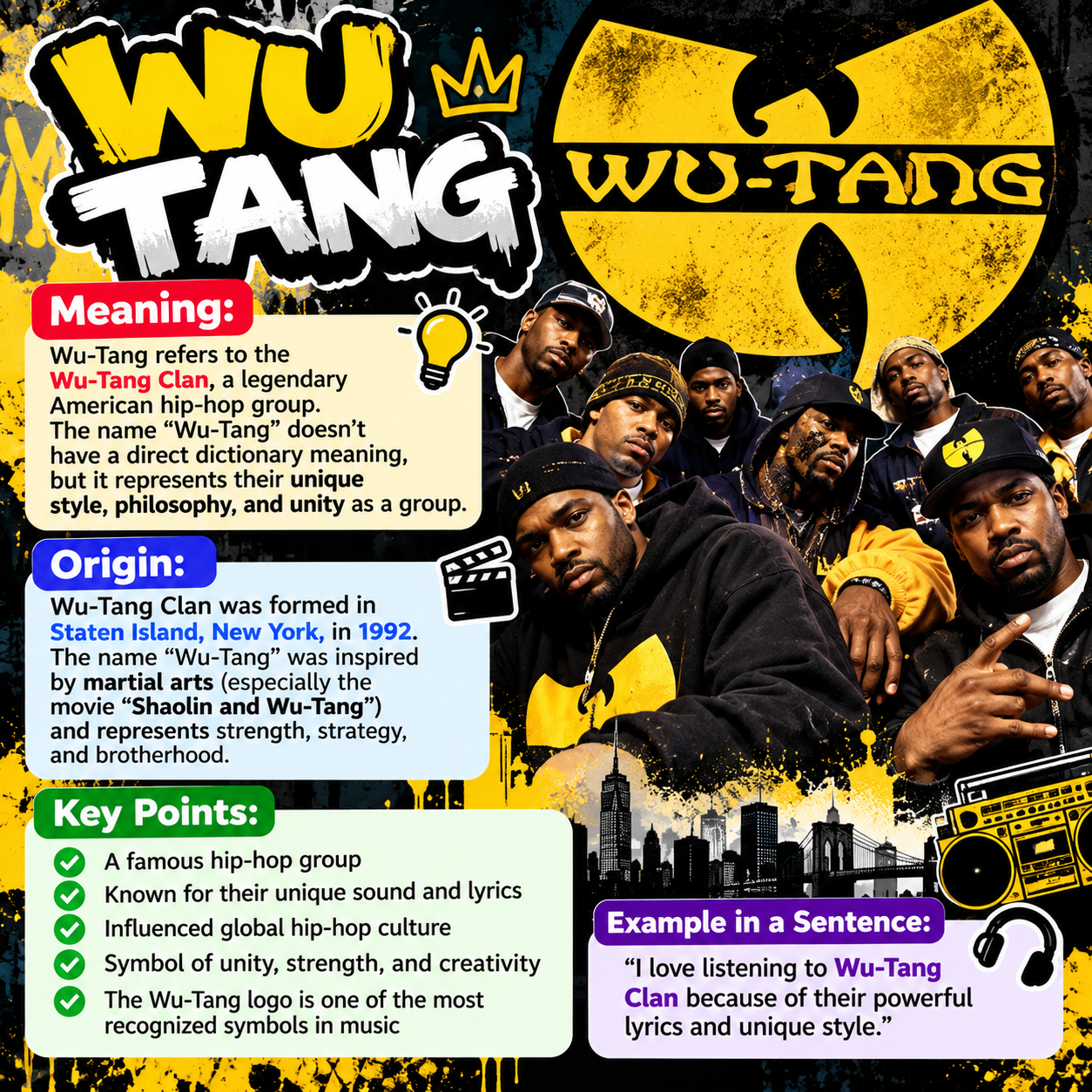
The Wu Tang meaning originates from Wudang Shan (Wudang Mountain), a famous mountain range in Hubei, China, renowned for Daoist monasteries and martial arts styles emphasizing fluid, internal energy. Made world-famous by the rap collective Wu-Tang Clan, the name visually translates to “Wu-Tang Sword” or “Wudang Martial Arts Style,” symbolizing precision, heritage, mastery, and unyielding cultural identity.
                  ┌─────────────────────────────────────┐
                  │    ORIGINS & CULTURAL FOUNDATION    │
                  │ Wudang Shan (Martial Arts Heritage) │
                  └──────────────────┬──────────────────┘
                                     │
                 ┌───────────────────┴───────────────────┐
                 │                                       │
                 ▼                                       ▼
    ┌──────────────────────────┐            ┌──────────────────────────┐
    │    HIP-HOP LEXICON       │            │  MODERN BRAND IDENTITY   │
    │ Raw Mastery, Precision,  │            │ Iconic Symbolism & Soft  │
    │   Authentic Lore         │            │  Power Strategy          │
    └──────────────────────────┘            └──────────────────────────┘
Most founders pick names out of a hat without understanding their root energy. When you analyze iconic cultural names, you quickly realize that depth drives retention—which is why understanding idea names with deep roots is essential when building a brand that lasts.
Let’s break down how cultural symbolism translates into memorable brand authority. No fluff, just strategy.
The Origin Story: Martial Arts Lore to Global Empire
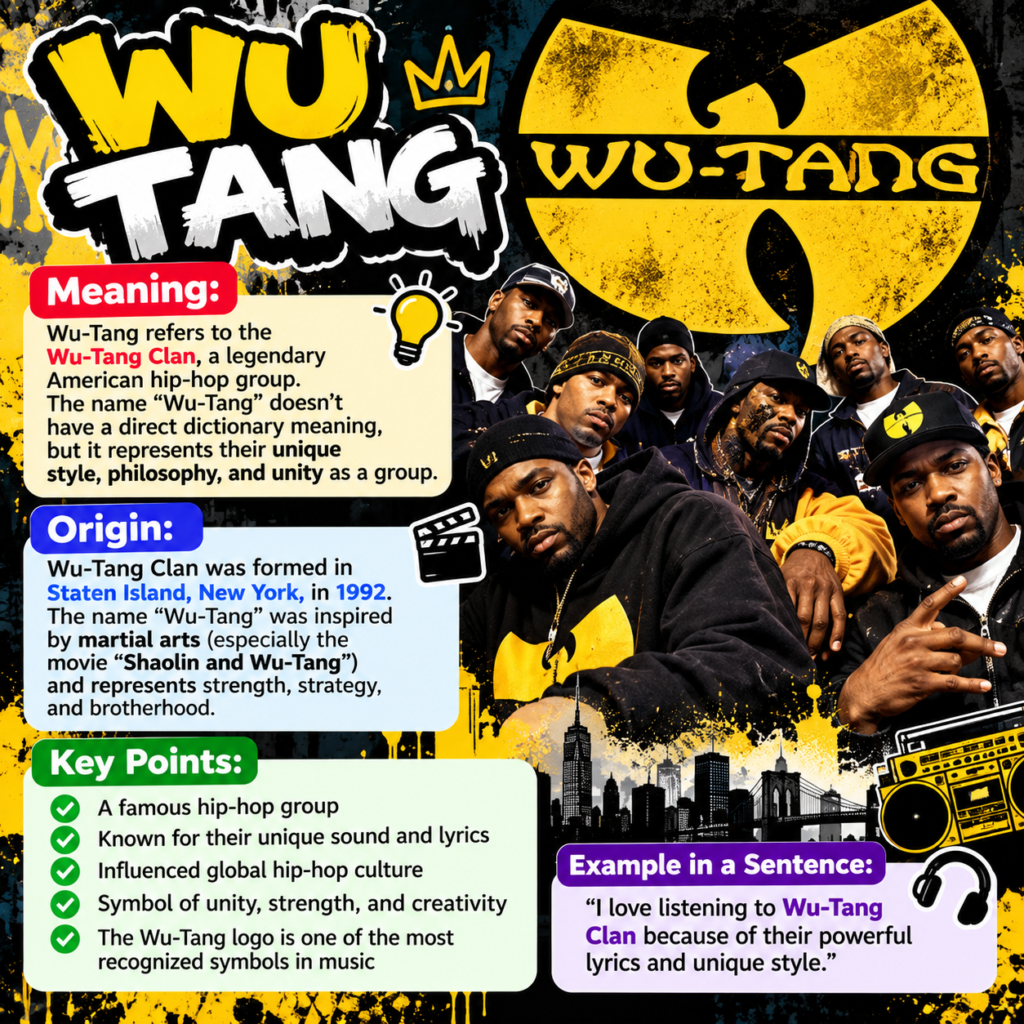
The name draws directly from the 1983 martial arts cinema classic Shaolin and Wu Tang. In kung fu folklore, Wudang (Wu Tang) martial artists stood as the sword-wielding counterparts to the Shaolin hand-to-hip combatants.
When RZA and the group adopted the name in 1992, they weren’t just picking a cool phrase. They engineered a complete mythical ecosystem around four distinct pillars:
- Internal Power (Neijia): Unlike hard, external striking styles, Wudang martial arts prioritize internal energy flow, leverage, and defense.
- The Sword Metaphor: Rhymes were treated as razor-sharp blades, turning verbal delivery into physical craftsmanship.
- Philosophical Dualism: Balancing the aggressive energy of Shaolin with the tactical grace of Wu Tang created narrative contrast.
- Cultural Re-appropriation: Transforming 1970s Hong Kong cinema quotes into urban street philosophy created an instant, unbreakable aesthetic bond.
Categorized Identity Names Inspired by Cultural Lore
When creating brand concepts with high semantic punch, look at how different name styles evoke specific brand attributes:
1. Mythological & Martial Names
- Wudang | Internal strength, ancient heritage | Best For: High-end wellness, martial arts academies, heritage brands
- Shaolin | Discipline, focus, physical mastery | Best For: Performance apparel, fitness protocols, endurance gear
- Kensho | Initial insight or awakening in Zen | Best For: Executive coaching, analytics platforms, mindfulness apps
- Ronin | Masterless, independent, self-governing | Best For: Freelance networks, decentralized tech, security firms
2. Modern & Minimalist Names
- Kuro | Deep black, sleek elegance | Best For: Premium menswear, minimalist hardware, luxury auto
- Zensei | Guiding path, quiet wisdom | Best For: Educational platforms, AI workflow tools
- Tanto | Short blade, agile precision | Best For: Cybersecurity software, micro-SaaS tools
- Satori | Sudden enlightenment | Best For: Venture funds, innovation labs
3. Catchy & Aesthetic Names
- Vanguard | Leading edge, front line | Best For: Modern fintech, growth agencies
- Cipher | Secret code, digital sovereignty | Best For: Cryptographic tools, privacy tech
- Ironclad | Unbreakable defense, total trust | Best For: Data storage, legal services, construction
- Zenith | Peak performance, highest point | Best For: Aerospace, high-altitude outdoors, luxury real estate
Linguistic & Naming Psychology Breakdown
Here’s why names rooted in hard consonants and ancient symbolism cut through modern noise.
       PHONETIC POWER          SYMBOLIC RESONANCE         BRAND ENGINE
  ┌──────────────────────┐    ┌───────────────────┐    ┌─────────────────┐
  │ Plosive "W" + "T"    │ ─► │ Martial Precision │ ─► │ High Recall     │
  │ Sharp Staccato Flow  │    │ Uncompromising    │    │ Instant Authority│
  └──────────────────────┘    └───────────────────┘    └─────────────────┘
The phonetic structure of “Wu Tang” relies heavily on hard, decisive sounds:
- Plosive and Alveolar Stops: The “T” sound creates an instant phonetic break, making the phrase sound sharp and tactical.
- Vowel Balance: Switching from the soft, rounded “Wu” to the open, resonant “Tang” creates natural cadence and high recall.
- Semantic Anchoring: By anchoring the name to a known physical object (the sword) and a known location (the mountain), the name builds instant visual association in the brain.
This is precisely why generic idea names generated by basic AI tools often fail—they lack the structural phonetics and cultural storytelling required to anchor themselves in human memory.
Comparison & Meaning Matrix
| Name | Meaning / Vibe | Ideal Industry / Brand Fit | Phonetic Weight |
| Wu Tang | Martial precision, internal power | Media empires, lifestyle brands, streetwear | Heavy / Staccato |
| Satori | Sudden clarity, peak focus | EdTech, SaaS platforms, executive coaching | Light / Fluid |
| Ronin | Independent, masterless autonomy | Decentralized finance, freelance platforms | Balanced / Sharp |
| Ironclad | Unyielding trust, physical armor | Cybersecurity, structural engineering, legal | Heavy / Solid |
| Kensho | Deep insight, true nature | Business intelligence, data analytics | Smooth / Precise |
Common Pitfalls When Selecting Cultural Brand Names
Here’s where most founders mess up when choosing names with heavy cultural or historical context:
- Pronunciation Friction: Picking a name that target customers struggle to spell after hearing it once spoken aloud.
- Superficial Adoption: Using cultural terminology without understanding the underlying history, leading to swift backlash.
- Trademark Bottlenecks: Selecting terms so deeply ingrained in pop culture or existing commercial enterprises that IP approval becomes impossible.
- Geographic or Scaling Limitations: Choosing a name that locks your business into a narrow niche or regional market when you plan to scale globally.
Strategic Selection Framework: How to Test & Filter Your Name
Before locking in your brand identity, put your candidates through this four-step validation check:
┌─────────────────┐     ┌─────────────────┐     ┌─────────────────┐     ┌─────────────────┐
│ 1. Phone Test   │ ──► │ 2. Search Clean │ ──► │ 3. Cultural Check│ ──► │ 4. Trademark    │
│ Say it fast to  │     │ Ensure low SERP │     │ Validate full   │     │ Secure legal    │
│ three people    │     │ clutter         │     │ history & context│     │ ownership       │
└─────────────────┘     └─────────────────┘     └─────────────────┘     └─────────────────┘
- The Radio/Phone Test: Say the name aloud to three people over a call. If you have to spell it out twice, discard it.
- The SERP Cleanliness Check: Search the main term on Google. If the first three pages are dominated by global mega-brands or legal litigation, pick a different angle.
- The Cultural Origin Audit: Unpack the complete historical context of the word to ensure your brand usage aligns cleanly with its roots.
- The Trademark & Domain Audit: Verify exact-match domain options and run preliminary checks on global trademark registries before ordering brand assets.
Frequently Asked Questions
What is the primary Wu Tang meaning in English?
In English, the Wu Tang meaning translates to “Wudang Mountain” or “Wudang Martial Arts Style.” It refers to the historical Daoist mountain range in Hubei, China, famed for internal martial arts styles like Tai Chi and Wudang Sword.
How does cultural depth help in selecting effective idea names?
Names rooted in genuine cultural history, mythology, or philosophy carry built-in visual imagery and emotional weight. This makes them far easier for consumers to remember, trust, and recognize compared to randomly generated abstract words.
Is Wu Tang a protected trademark?
Yes. The phrase “Wu-Tang” and its associated logos are heavily protected trademarks owned by the Wu-Tang Clan’s intellectual property holding entities. Businesses cannot use the term directly for commercial ventures without licensing.
