
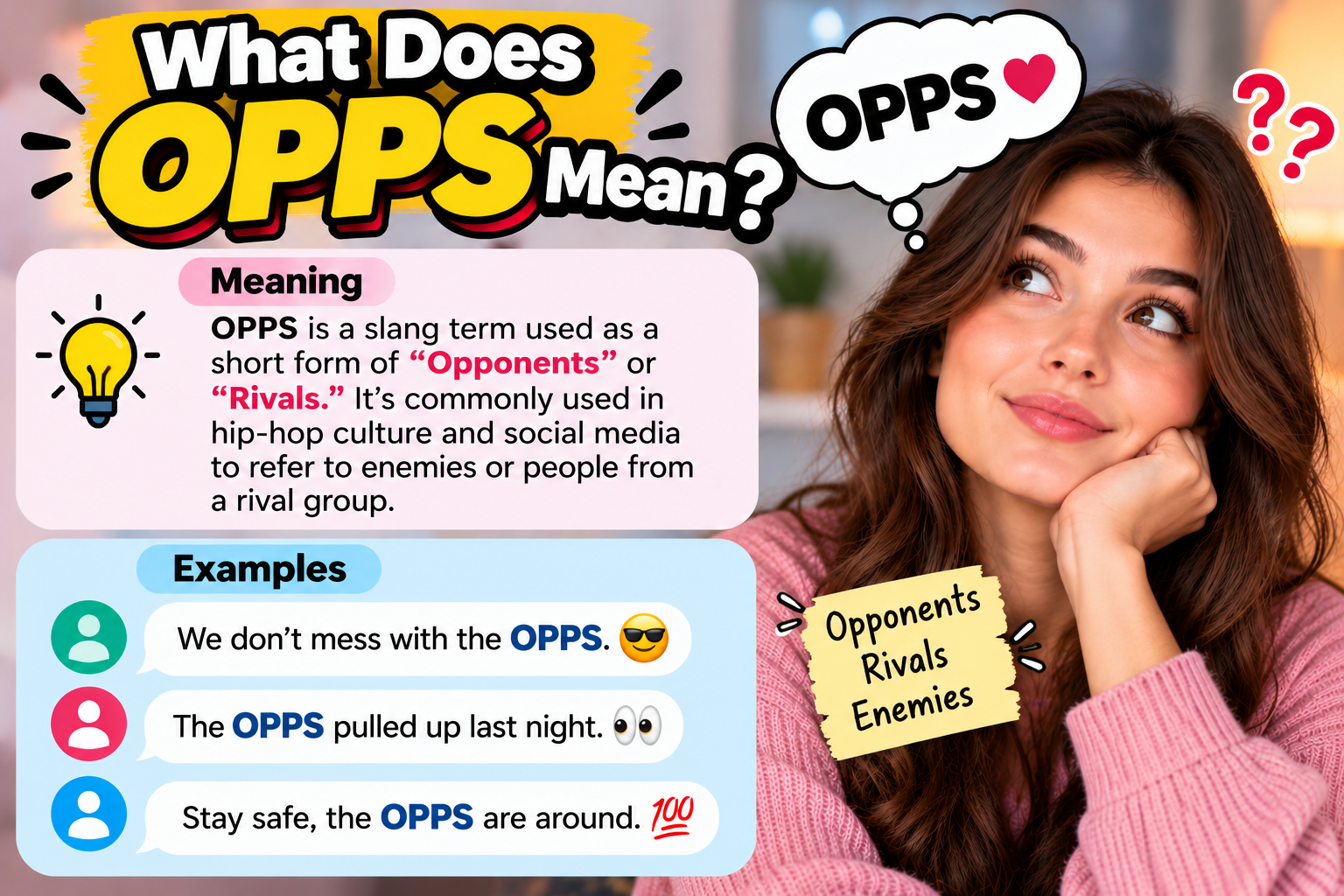
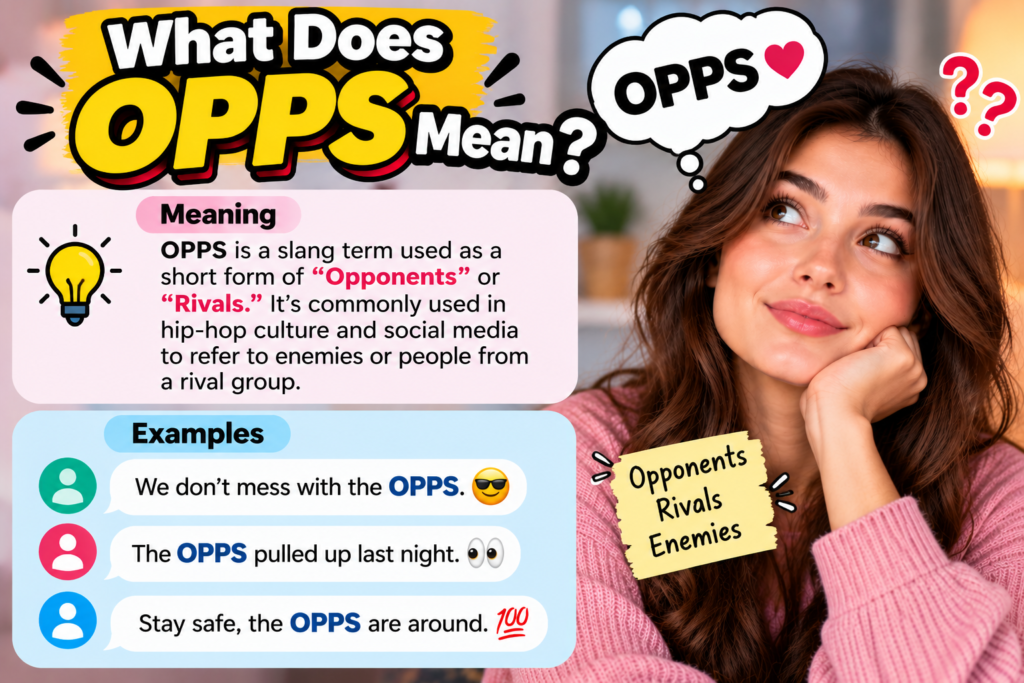
The term opps is urban slang short for “opposition” or “opponents,” referring to rivals, enemies, or competitors. Originating in Chicago drill music and street culture, the opps meaning has expanded into mainstream pop culture, digital communication, and modern brand strategy to denote any competing force or rival entity.
Most online definitions focus strictly on street culture without explaining how modern slang impacts consumer perception and digital search intent. When exploring slang terms and cultural naming trends, understanding context is critical to avoiding unintended brand associations and domain positioning blunders.
The Cultural Evolution of “Opps”
Slang moves fast, but its roots dictate how people perceive it in everyday conversation and digital queries.
- Street Culture Roots: Originally coined in South Side Chicago hip-hop, “opp” served as direct shorthand for rival gang members or hostile forces.
- Mainstream Pop Culture Expansion: Popularized globally through rap lyrics, viral social media trends, and gaming communities, the term now broadly signifies any antagonist, competitor, or obstacle.
- Modern Conversational Usage: Today, people use it casually to describe minor rivalries, tough competition, or even personal distractions (“avoiding the opps”).
Understanding these linguistic nuances helps creators, naming strategists, and everyday readers distinguish between raw street vernacular and normalized cultural idioms.
Categorized Name Ideas Inspired by Rivalry and Edge
If you are looking for brand or persona names that tap into competitive energy, contrast, or bold positioning, explore these curated naming directions:
1. Modern & Bold
- Vanguard | Leading edge, standing against the standard | Best for Fintech, Security
- Rivalry | Direct competitive force and drive | Best for Athletic Wear, Esports
- Counterforce | Active resistance to status quo | Best for Tech Startups, Consulting
- Apex | Reaching the top above competitors | Best for Performance Brands, Agencies
2. Aesthetic & Minimalist
- Nadir | The contrasting low against the high | Best for Luxury Fashion, Design Studios
- Aura | Distinct presence that commands space | Best for Lifestyle, Skincare
- Veto | Decisive power to reject the norm | Best for Legal Tech, Software
- Cipher | Mysterious, sharp, and exclusive | Best for Cybersecurity, Private Clubs
3. Catchy & High-Energy
- Clash | High energy, immediate impact | Best for Gaming Studios, Energy Drinks
- Maverick | Independent thinker, ignoring rivals | Best for Venture Capital, Media
- Outlier | Standing completely apart from the crowd | Best for Analytics, Education
- Friction | Creating positive spark from opposition | Best for Fitness Apps, Creative Agencies
Linguistic & Naming Psychology Breakdown
Why do words associated with rivalry, tension, or sharp phonetics capture attention so effectively?
Here’s where most founders and creators get it wrong: they assume negative or aggressive root meanings are unusable. In reality, strong phonetic structures evoke power, resilience, and differentiation when applied correctly.
- Hard Consonants Create Authority: Words featuring plosive sounds (P, T, K, B) create an immediate psychological impression of strength and memorability.
- Contrast Drives Recall: Human psychology pays closer attention to terms implying tension, struggle, or victory over an obstacle than to passive, neutral terms.
- Subcultural Authenticity: Incorporating dynamic street slang terms or competitive imagery gives modern digital brands a feeling of energy and youth culture alignment.
Comparison & Meaning Matrix
| Name / Term | Meaning / Core Vibe | Ideal Industry / Brand Fit |
| Opp / Opps | Rival, opponent, hostile force | Hip-hop media, gaming slang, street fashion |
| Vanguard | Forefront of a movement, resisting legacy norms | Security, fintech, enterprise software |
| Maverick | Independent actor who defies opposition | Creator platforms, podcast networks, VC firms |
| Clash | Energetic collision of competing ideas | Mobile gaming, streetwear, action sports |
| Apex | Dominance over all opposition | High-performance gear, executive coaching |
Common Pitfalls When Selecting Names Driven by Slang
Let’s break it down simply. No jargon, just facts.
- Ignoring Subcultural Context: Using street slang without understanding its full origin can lead to tone-deaf messaging or brand backlash.
- Pronunciation & Context Friction: Choosing a term with heavy negative connotations might alienate mainstream enterprise clients or corporate partners.
- Trademark Bottlenecks: Trendy slang words and common phonetic variations often face crowded trademark registries and taken social handles.
- Scaling Limitations: Highly niche vernacular might feel cutting-edge today, but could date your project as cultural trends shift over time.
Strategic Selection Framework
To filter and validate any brand name or identity concept inspired by dynamic cultural terms, follow this simple step-by-step checklist:
- Audience Alignment Test: Ensure your target demographic understands and responds positively to the tone and energy of the name.
- Linguistic Safety Audit: Verify that the term or slang root doesn’t translate into offensive or damaging meanings in key global markets.
- Domain & Handle Clearance: Check exact-match
.comavailability, social media handles, and app store presence early. - Contextual Longevity Check: Ask yourself if the name will still sound relevant, professional, and powerful 5 to 10 years from now.
Frequently Asked Questions
What does “opps” mean in hip-hop and rap music?
In hip-hop culture, “opps” is short for opposition or opponents. It refers directly to enemies, rivals, or competing groups, particularly within street and drill music contexts.
Is “opps” short for officers or police?
While some online communities occasionally confuse the term, “opps” specifically means opposition or enemies. Police are traditionally referred to using separate slang terms like “12” or “fuzz.”
Can dynamic slang terms be used in modern business naming?
Yes, but context matters. Modern consumer-facing brands, gaming platforms, and apparel lines often leverage urban slang or edge-driven terms to build high-energy, relatable identities. However, enterprise B2B companies generally lean toward more classic, neutral nomenclature.
