

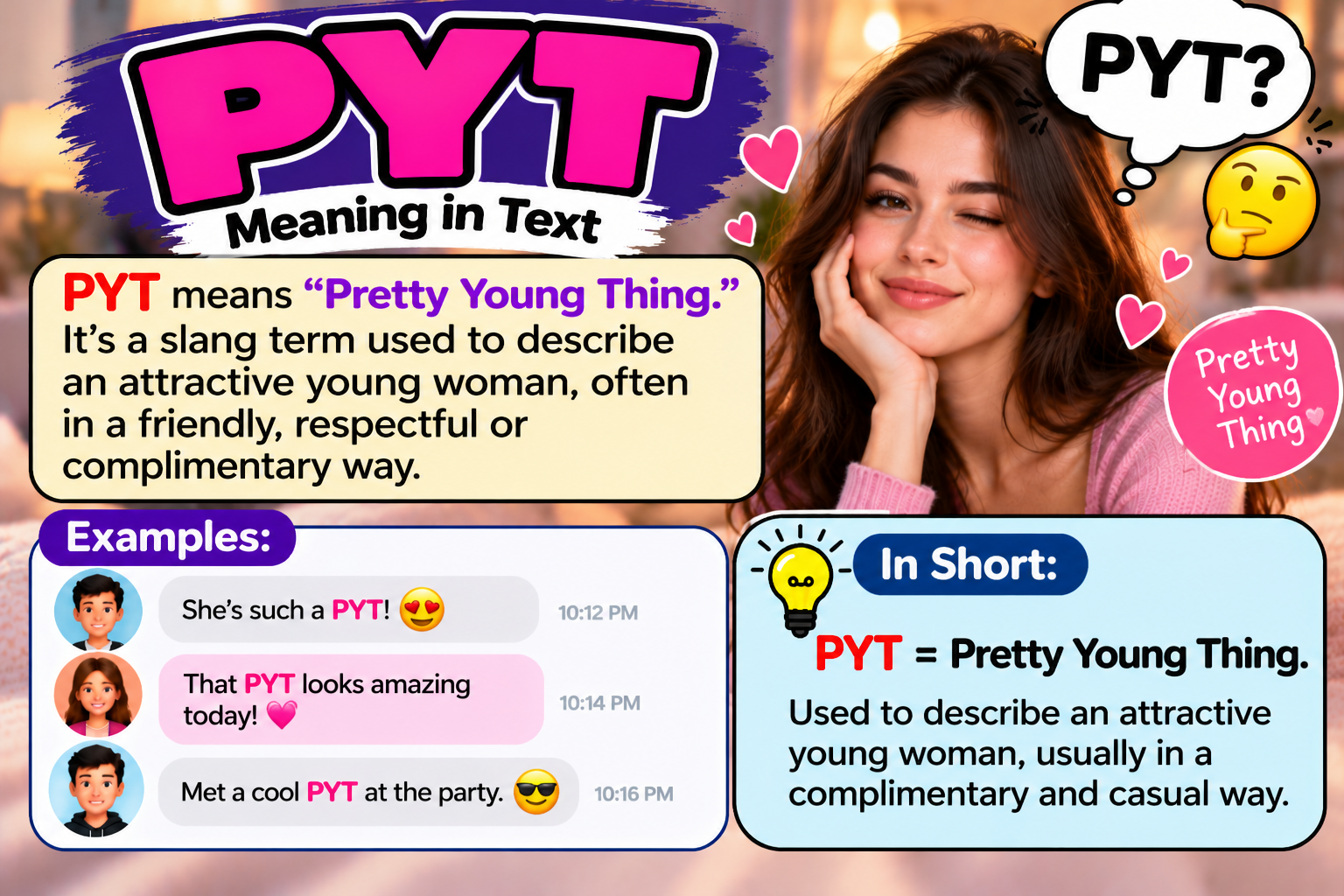
PYT stands for “Pretty Young Thing,” a popular slang acronym used to describe an attractive, youthful, confident, and trendy person. Originating from pop culture, the term has evolved from an iconic song title into a widely recognized Internet slang term, social media aesthetic, and vibrant branding concept.
Most name generators spit out generic, robotic words that feel utterly soul-less. If you are researching the PYT meaning to name a modern brand, launch a creative campaign, or tap into youth culture, random words won’t cut it. To build a lasting identity around high-energy slang, you need linguistic intentionality, clean phonetic flow, and cultural resonance.
Let’s break down everything you need to know about this iconic acronym, its cultural roots, and how to harness creative ideas for pretty young thing in modern brand strategy.
The Origin & Cultural Evolution of PYT
The acronym PYT entered mainstream vernacular through Michael Jackson’s hit 1982 track, “P.Y.T. (Pretty Young Thing).” Written by James Ingram and Quincy Jones, the song cemented the term as an expression of charm, playful romance, and vibrant youthfulness.
Over the decades, the phrase made a seamless transition from funk and pop radio into hip-hop culture, early 2000s urban streetwear, and modern social media captions. Today, on platforms like Instagram and TikTok, PYT functions both as a direct compliment and a broader aesthetic marker associated with confidence, modern fashion, and effortless allure.
Categorized Brand Name Ideas Inspired by PYT
If you are looking for creative ideas for pretty young thing inspired brands—ranging from boutique fashion labels and beauty startups to lifestyle apps—here is how to structure that energy into distinct brand naming categories:
1. Modern & Trend-Forward
- PYT Collective | Vibe: Chic, inclusive, community-driven | Best For: Contemporary streetwear or lifestyle brands
- Pretty Young Studio | Vibe: Sleek, high-fashion, editorial | Best For: Creative agencies or boutique photography studios
- Youth & Thing | Vibe: Minimalist subversion, artistic | Best For: Unisex apparel or independent cosmetics
2. Aesthetic & Beauty Focused
- Velvet PYT | Vibe: Luxurious, smooth, sensual | Best For: Skincare, lip oils, or evening wear
- Aura PYT | Vibe: Radiant, ethereal, modern | Best For: Clean beauty products or wellness apps
- Glow Young | Vibe: Fresh, energetic, health-first | Best For: Hydration drinks or botanical skincare
3. Catchy & Pop-Culture Driven
- PYT Rush | Vibe: Fast, high-octane, bold | Best For: Energy drinks, festival wear, or digital media
- The PYT Club | Vibe: Exclusive, fun, social | Best For: Subscription boxes or membership communities
- Iconic Thing | Vibe: Confident, memorable, punchy | Best For: Statement accessories or footwear
Linguistic & Naming Psychology Breakdown
Why does a phrase like “Pretty Young Thing” stick in the human brain for over four decades? The answer lies in phonetics and psychological triggers.
<!DOCTYPE html>
<html lang="en">
<head>
<meta charset="UTF-8">
<meta name="viewport" content="width=device-width, initial-scale=1.0">

<title>PYT Phonetic Structure</title>

<style>
    * {
        box-sizing: border-box;
    }

    body {
        margin: 0;
        padding: 40px 20px;
        font-family: Arial, Helvetica, sans-serif;
        background: #f4f7fb;
        color: #172033;
    }

    .container {
        max-width: 900px;
        margin: auto;
    }

    .title {
        text-align: center;
        font-size: 30px;
        font-weight: 800;
        margin-bottom: 30px;
        letter-spacing: 1px;
    }

    .section {
        background: #ffffff;
        border-radius: 18px;
        padding: 28px;
        margin-bottom: 25px;
        box-shadow: 0 8px 25px rgba(23, 32, 51, 0.10);
    }

    .section-title {
        font-size: 20px;
        font-weight: 800;
        margin-bottom: 20px;
    }

    .phonetic-flow {
        display: flex;
        align-items: center;
        justify-content: center;
        gap: 12px;
        flex-wrap: wrap;
    }

    .sound {
        min-width: 110px;
        padding: 18px 15px;
        text-align: center;
        border-radius: 14px;
        color: #ffffff;
        font-size: 24px;
        font-weight: 800;
    }

    .sound small {
        display: block;
        margin-top: 7px;
        font-size: 12px;
        font-weight: 600;
        opacity: 0.9;
    }

    .p {
        background: #2864d7;
    }

    .j {
        background: #7b45d6;
    }

    .t {
        background: #e58b24;
    }

    .arrow {
        font-size: 28px;
        font-weight: 800;
        color: #687386;
    }

    .impact {
        display: grid;
        grid-template-columns: repeat(3, 1fr);
        gap: 15px;
    }

    .impact-card {
        padding: 22px 16px;
        border-radius: 15px;
        text-align: center;
        background: #f7f9fc;
        border: 2px solid #e5e9f0;
    }

    .impact-card .number {
        width: 38px;
        height: 38px;
        margin: 0 auto 12px;
        border-radius: 50%;
        display: flex;
        align-items: center;
        justify-content: center;
        color: #ffffff;
        font-weight: 800;
    }

    .impact-card:nth-child(1) .number {
        background: #2864d7;
    }

    .impact-card:nth-child(2) .number {
        background: #7b45d6;
    }

    .impact-card:nth-child(3) .number {
        background: #e58b24;
    }

    .impact-card h3 {
        margin: 0 0 8px;
        font-size: 17px;
    }

    .impact-card p {
        margin: 0;
        color: #687386;
        font-size: 14px;
        line-height: 1.5;
    }

    .summary {
        background: #172033;
        color: #ffffff;
        text-align: center;
        border-radius: 16px;
        padding: 22px;
        font-size: 16px;
        line-height: 1.6;
    }

    .summary strong {
        color: #ffffff;
    }

    @media (max-width: 650px) {
        body {
            padding: 25px 14px;
        }

        .title {
            font-size: 23px;
        }

        .section {
            padding: 20px 15px;
        }

        .phonetic-flow {
            flex-direction: column;
        }

        .arrow {
            transform: rotate(90deg);
        }

        .impact {
            grid-template-columns: 1fr;
        }

        .sound {
            width: 100%;
            max-width: 180px;
        }
    }
</style>
</head>

<body>

<div class="container">

    <div class="title">
        PYT — PHONETIC STRUCTURE
    </div>

    <div class="section">

        <div class="section-title">
            Phonetic Structure
        </div>

        <div class="phonetic-flow">

            <div class="sound p">
                /p/
                <small>Plosive</small>
            </div>

            <div class="arrow">→</div>

            <div class="sound j">
                /j/
                <small>Glide</small>
            </div>

            <div class="arrow">→</div>

            <div class="sound t">
                /t/
                <small>Plosive</small>
            </div>

        </div>

    </div>

    <div class="section">

        <div class="section-title">
            Psychological Impact
        </div>

        <div class="impact">

            <div class="impact-card">
                <div class="number">1</div>
                <h3>Energetic Start</h3>
                <p>
                    The opening plosive creates a strong and immediate sound.
                </p>
            </div>

            <div class="impact-card">
                <div class="number">2</div>
                <h3>Soft Transition</h3>
                <p>
                    The glide creates a smoother transition between sounds.
                </p>
            </div>

            <div class="impact-card">
                <div class="number">3</div>
                <h3>Sharp Stop</h3>
                <p>
                    The final plosive creates a crisp and memorable ending.
                </p>
            </div>

        </div>

    </div>

    <div class="summary">
        <strong>Overall Effect:</strong>
        Energetic start → Soft transition → Sharp, memorable stop
    </div>

</div>

</body>
</html>
Here is why this structure works so effectively:
- Plosive Sound Dynamics: The acronym starts and ends with hard plosive consonants (
/p/and/t/). Plosives force a sudden burst of air when pronounced, making the term sound energetic, snappy, and inherently memorable. - Aspirational Identity: The words “Pretty” and “Young” trigger immediate visual imagery associated with vigor, beauty, and optimism. In consumer psychology, aspirational naming allows customers to project their ideal self-image onto the product.
- The “Thing” Anomaly: Using the word “Thing” introduces a touch of intriguing ambiguity. It shifts the phrase from a rigid description into an all-encompassing vibe or phenomenon.
Naming Comparison & Vibe Matrix
| Brand Name Idea | Meaning / Core Vibe | Ideal Industry / Brand Fit | Target Demographic |
| PYT Beauty | Bold, youth-centric cosmetic energy | Clean Makeup / Gen-Z Cosmetics | Ages 16–28 |
| Pretty Young Thread | Artisanal, crafted youth fashion | Sustainable Apparel / Streetwear | Ages 18–35 |
| P.Y.T. Lab | Experimental, high-tech beauty formulations | Skincare & Biotech Beauty | Ages 22–40 |
| The Young Thing | Edgy, indie, counter-culture minimalism | Media / Podcast / Fashion Label | Ages 18–30 |
Common Pitfalls When Selecting Pop-Culture Names
Tapping into slang and cultural terms can supercharge your brand’s energy, but it comes with distinct strategic risks. Here is where most founders get tripped up:
- Pronunciation Friction: Ensure your target audience knows whether to spell out the acronym (P-Y-T) or pronounce it as a single word (Pit/Pyt). Clear phonetic direction in marketing is essential.
- Trademark Bottlenecks: Popular slang terms frequently face trademark clutter. Always conduct thorough trademark database checks across your specific product classes before committing to a domain or logo.
- Scaling Limitations: A name heavily reliant on “Youth” must be carefully positioned so it doesn’t limit your business as your customer base matures over time.
- Domain Availability Hardstops: Direct
.comdomains for three-letter acronyms are notoriously expensive or unavailable. Prepare a solid modifier strategy (e.g.,GetPYT.comorPYTOfficial.com).
Strategic Selection Framework
Before locking in any name derived from modern acronyms or cultural phrases, run it through this four-step strategy:
<!DOCTYPE html>
<html lang="en">
<head>
<meta charset="UTF-8">
<meta name="viewport" content="width=device-width, initial-scale=1.0">
<title>Brand Name Evaluation Process</title>

<style>
    * {
        box-sizing: border-box;
    }

    body {
        margin: 0;
        padding: 40px 20px;
        font-family: Arial, Helvetica, sans-serif;
        background: #f4f7fb;
        color: #172033;
    }

    .container {
        max-width: 1100px;
        margin: auto;
    }

    .title {
        text-align: center;
        font-size: 30px;
        font-weight: 800;
        margin-bottom: 35px;
        letter-spacing: 0.5px;
    }

    .process {
        display: flex;
        align-items: stretch;
        justify-content: center;
        gap: 0;
    }

    .step {
        flex: 1;
        min-height: 155px;
        padding: 25px 18px;
        background: #ffffff;
        border-radius: 18px;
        text-align: center;
        box-shadow: 0 8px 25px rgba(23, 32, 51, 0.10);
        border-top: 6px solid #2864d7;
        display: flex;
        flex-direction: column;
        justify-content: center;
    }

    .step:nth-child(3) {
        border-top-color: #7b45d6;
    }

    .step:nth-child(5) {
        border-top-color: #e58b24;
    }

    .step:nth-child(7) {
        border-top-color: #249b72;
    }

    .number {
        width: 40px;
        height: 40px;
        margin: 0 auto 12px;
        border-radius: 50%;
        background: #2864d7;
        color: #ffffff;
        display: flex;
        align-items: center;
        justify-content: center;
        font-weight: 800;
        font-size: 16px;
    }

    .step:nth-child(3) .number {
        background: #7b45d6;
    }

    .step:nth-child(5) .number {
        background: #e58b24;
    }

    .step:nth-child(7) .number {
        background: #249b72;
    }

    .step h2 {
        margin: 0;
        font-size: 18px;
        line-height: 1.3;
    }

    .arrow {
        width: 55px;
        display: flex;
        align-items: center;
        justify-content: center;
        font-size: 30px;
        font-weight: 800;
        color: #687386;
    }

    .footer {
        margin-top: 30px;
        padding: 20px;
        background: #172033;
        color: #ffffff;
        text-align: center;
        border-radius: 15px;
        font-size: 14px;
    }

    @media (max-width: 850px) {
        .process {
            display: grid;
            grid-template-columns: 1fr;
            gap: 0;
        }

        .step {
            min-height: auto;
            padding: 22px;
        }

        .arrow {
            width: 100%;
            height: 45px;
            transform: rotate(90deg);
            font-size: 25px;
        }

        .title {
            font-size: 24px;
        }
    }

    @media (max-width: 500px) {
        body {
            padding: 25px 14px;
        }

        .title {
            font-size: 21px;
        }

        .step h2 {
            font-size: 17px;
        }

        .footer {
            line-height: 1.5;
        }
    }
</style>
</head>

<body>

<div class="container">

    <div class="title">
        BRAND NAME EVALUATION PROCESS
    </div>

    <div class="process">

        <div class="step">
            <div class="number">1</div>
            <h2>Semantic Fit</h2>
        </div>

        <div class="arrow">→</div>

        <div class="step">
            <div class="number">2</div>
            <h2>Phonetic Test</h2>
        </div>

        <div class="arrow">→</div>

        <div class="step">
            <div class="number">3</div>
            <h2>Clear Trademarks</h2>
        </div>

        <div class="arrow">→</div>

        <div class="step">
            <div class="number">4</div>
            <h2>Digital Footprint</h2>
        </div>

    </div>

    <div class="footer">
        A strong brand name should be meaningful, easy to pronounce,
        legally clear, and easy to discover online.
    </div>

</div>

</body>
</html>- Test for Semantic Fit: Does the slang alignment match your core product quality? If your product is conservative or industrial, a high-energy acronym will create cognitive dissonance.
- Perform the “Say It Loud” Test: Say the name out loud 10 times in a row. Does it cause tongue twists? Does it sound authoritative when answered over the phone?
- Verify Trademark & Class Clearness: Check registration databases (like the USPTO) within your specific industry classes to avoid costly rebrands down the line.
- Secure the Digital Footprint: Ensure you can secure exact or clean-modifier social handles across Instagram, TikTok, and key domain extensions.
Frequently Asked Questions
What does PYT mean in texting and social media?
In text messages and social media captions, PYT stands for “Pretty Young Thing.” It is used as a compliment to describe someone who is attractive, fashionable, and confident.
Is PYT exclusively used for women?
While historically applied more frequently to young women due to pop culture origins, modern usage across internet culture and unisex fashion branding has made the term far more fluid and versatile.
Can I legally trademark a brand name that includes PYT?
Yes, provided the specific mark is available within your business class and does not create consumer confusion with existing registered trademarks. Slang terms themselves cannot be monopolized, but unique brand combinations (e.g., “PYT Cosmetics”) can be protected.
