

Introduction
In modern digital communication, short-form acronyms dictate tone, emotional intensity, and social context. Understanding what does ISTG means goes beyond knowing the literal words behind the letters; it requires grasping the emotional weight and casual nuance that internet slang carries across text messages, TikTok captions, and brand conversations.
Most digital dictionary lists fail because they present acronyms in a vacuum without analyzing their conversational tone or brand safety. When you break down modern internet slang, you unlock how internet culture communicates sincerity, shock, or exasperation in four simple letters.
What Does ISTG Stand For? Meaning and Contexts
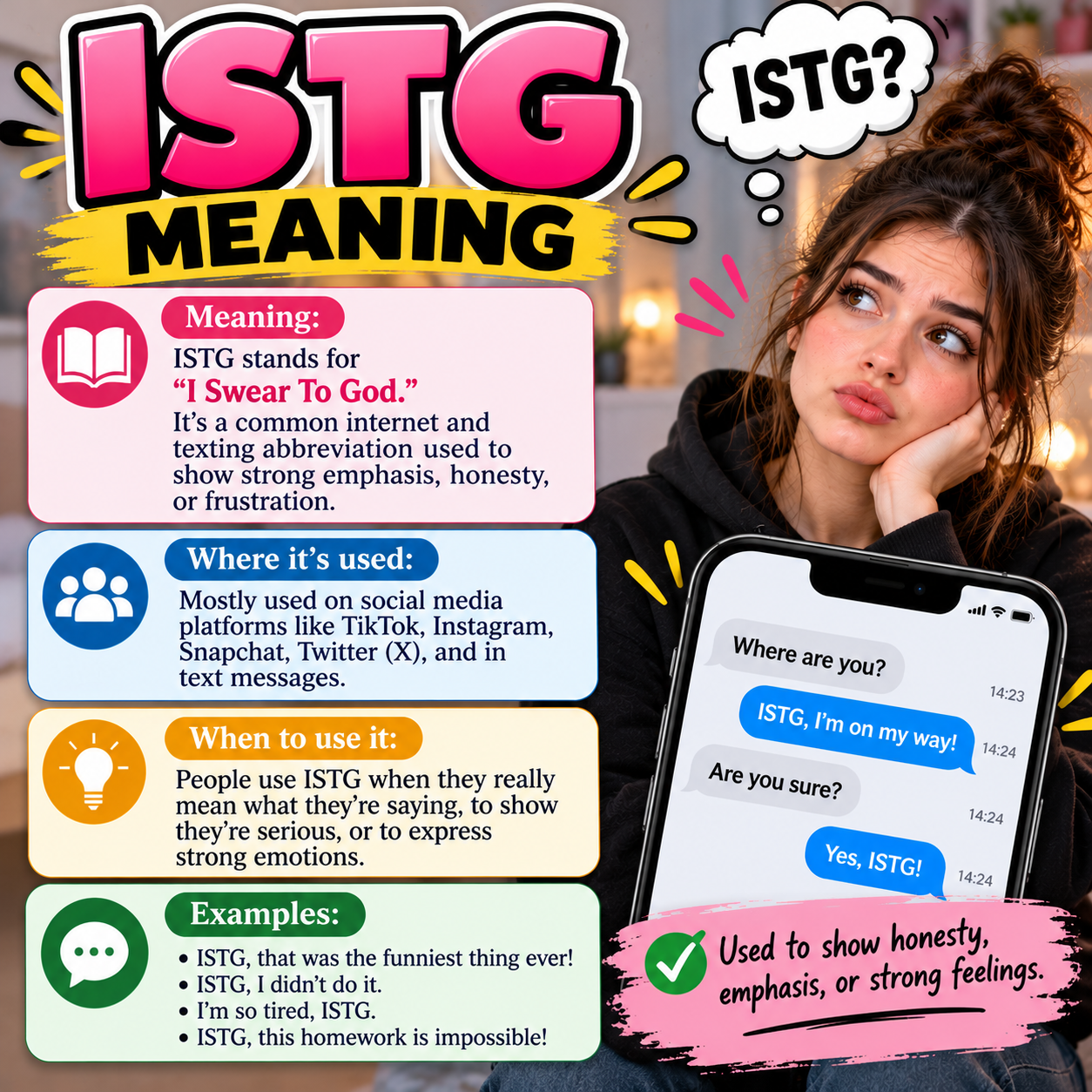
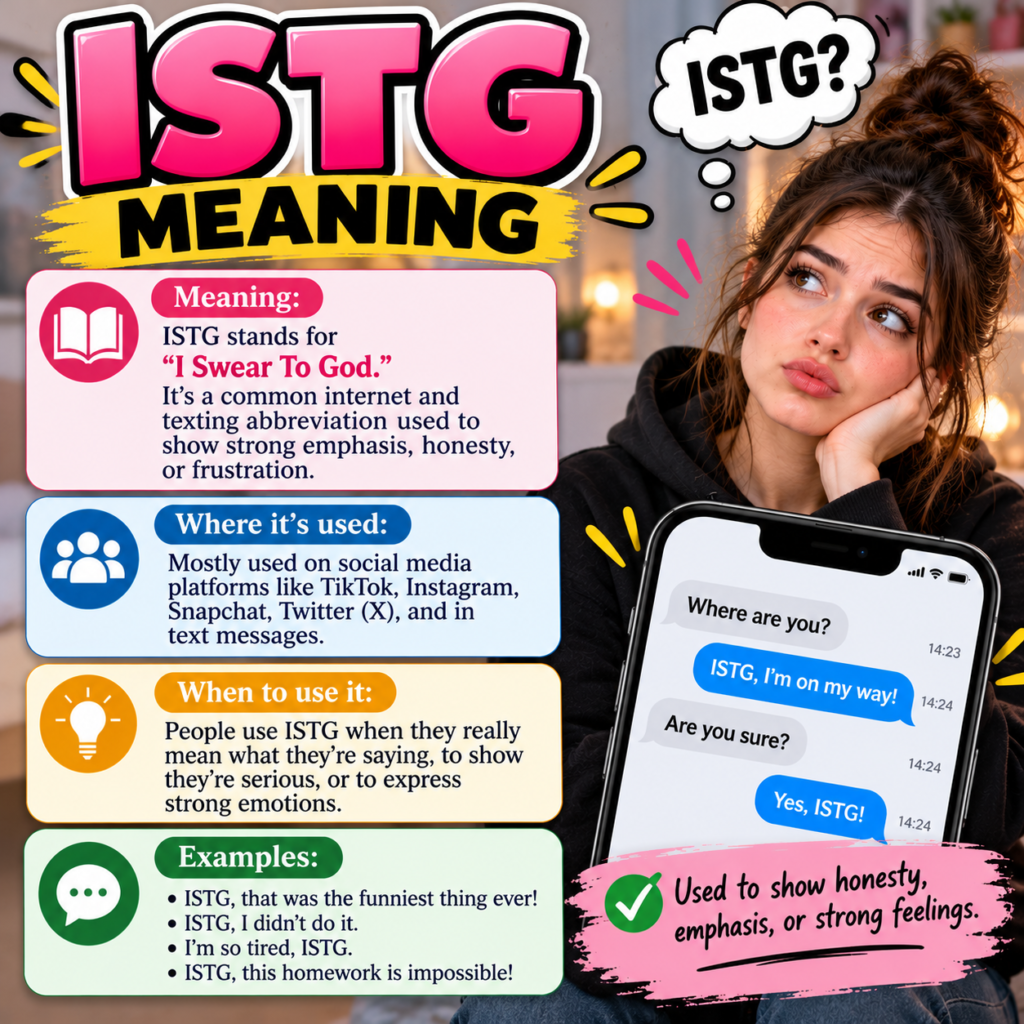
At its core, ISTG translates to “I Swear To God.” Depending on the tone of the conversation and sentence placement, it serves two main psychological functions:
- Emphasis on Sincerity: Used to prove that a statement is 100% true or genuine (e.g., “ISTG I didn’t see your message until now!”).
- Expression of Frustration: Used as an emotional release when dealing with an annoying or absurd event (e.g., “ISTG this traffic is never going to move.”).
Typical Usage Patterns
- All Caps (
ISTG): Signals high emotion, surprise, or heightened frustration. - Lowercase (
istg): Signals a casual tone, muted emphasis, or effortless aesthetic posting common on platforms like X (formerly Twitter) and Instagram.
Categorized Variations of Internet Slang Expressions
Understanding where ISTG fits into modern casual dialect helps clarify how different shorthand expressions set distinct digital tones:
1. High-Emphasis Expressions
- ISTG | I Swear To God | Best for emphasizing truth, intensity, or extreme frustration.
- FR | For Real | Best for validating someone else’s point or agreeing genuinely.
- NGL | Not Gonna Lie | Best for prefacing a candid confession or mild hot take.
2. Validation & Truth Markers
- IYKYK | If You Know, You Know | Best for inside jokes, niche references, or exclusive brand messaging.
- TBH | To Be Honest | Best for soft opinions or gentle transparency.
- ONG | On God | Best for strong personal assurances or solemn promises.
3. Emotional Reaction Shorthands
- SMH | Shaking My Head | Best for expressing disappointment, disapproval, or disbelief.
- IMHO | In My Humble Opinion | Best for polite discourse or community discussions.
- RN | Right Now | Best for real-time updates and creating a sense of urgency.
Linguistic & Naming Psychology Breakdown
Why do four-letter acronyms like ISTG become permanent fixtures in online vernacular?
Phonetic & Rhythmic Efficiency
The abbreviation condenses a four-syllable phrase into a single, punchy four-letter block. In high-speed chat environments, removing vowels and spacing allows speakers to inject strong emotional punctuation without interrupting the flow of text.
Emotional Triggers & Social Proof
Phrases like “I swear to god” tap into primal social contracts—promising truthfulness. In text form, typing ISTG acts as an informal emotional badge. It signaling to the recipient that the sender is dropping performance and stating raw, unfiltered truth.
Slang Meaning & Usage Matrix
| Term | Literal Meaning | Emotional Tone | Primary Use Case |
| ISTG | I Swear To God | Intense, Sincere, Exasperated | Validating statements or expressing annoyance |
| FR | For Real | Supportive, Agreeable | Confirming facts or showing solidarity |
| NGL | Not Gonna Lie | Transparent, Casual | Sharing low-stakes confessions or opinions |
| ONG | On God | Serious, Assertive | Staking personal credibility on a statement |
Common Pitfalls When Using Internet Slang
- Overusing High-Intensity Acronyms: Peppered into every sentence, terms like ISTG lose their emotional punch and make writing read as overly dramatic or forced.
- Ignoring Tone & Context: Using casual acronyms in professional emails, legal documentation, or formal customer support creates immediate friction and damages credibility.
- Misinterpreting Lowercase vs. Uppercase: Caps denote shouting or peak frustration, whereas lowercase feels understated. Swapping them unintentionally changes your message’s vibe.
Strategic Framework to Evaluate Casual Slang in Communication
When deciding whether to incorporate slang like ISTG or similar shorthand into casual brand copy, content creation, or social messaging, follow this simple 3-step filter:
- Audience Check: Is your primary audience Gen Z or digital-native Millennials who read internet shorthand natively?
- Context Audit: Is the topic lighthearted, relatable, or conversational? If the topic involves serious issue management, drop the slang entirely.
- Authenticity Test: Does the phrase sound natural when read aloud, or does it feel like an artificial attempt to sound young?
Frequently Asked Questions
What does ISTG means in text messaging?
In text messaging, ISTG is an acronym for “I Swear To God.” It is used to emphasize that you are telling the truth or to highlight strong feelings of frustration or excitement.
Is ISTG a rude term?
No, ISTG is not inherently rude, but it carries strong emotional weight. Depending on the conversation, it can sound impatient or frustrated if used during an argument.
How is ISTG different from FR or NGL?
While ISTG stresses solemn truth or frustration (“I swear”), FR (“For Real”) signals agreement, and NGL (“Not Gonna Lie”) introduces an honest opinion or confession.
