

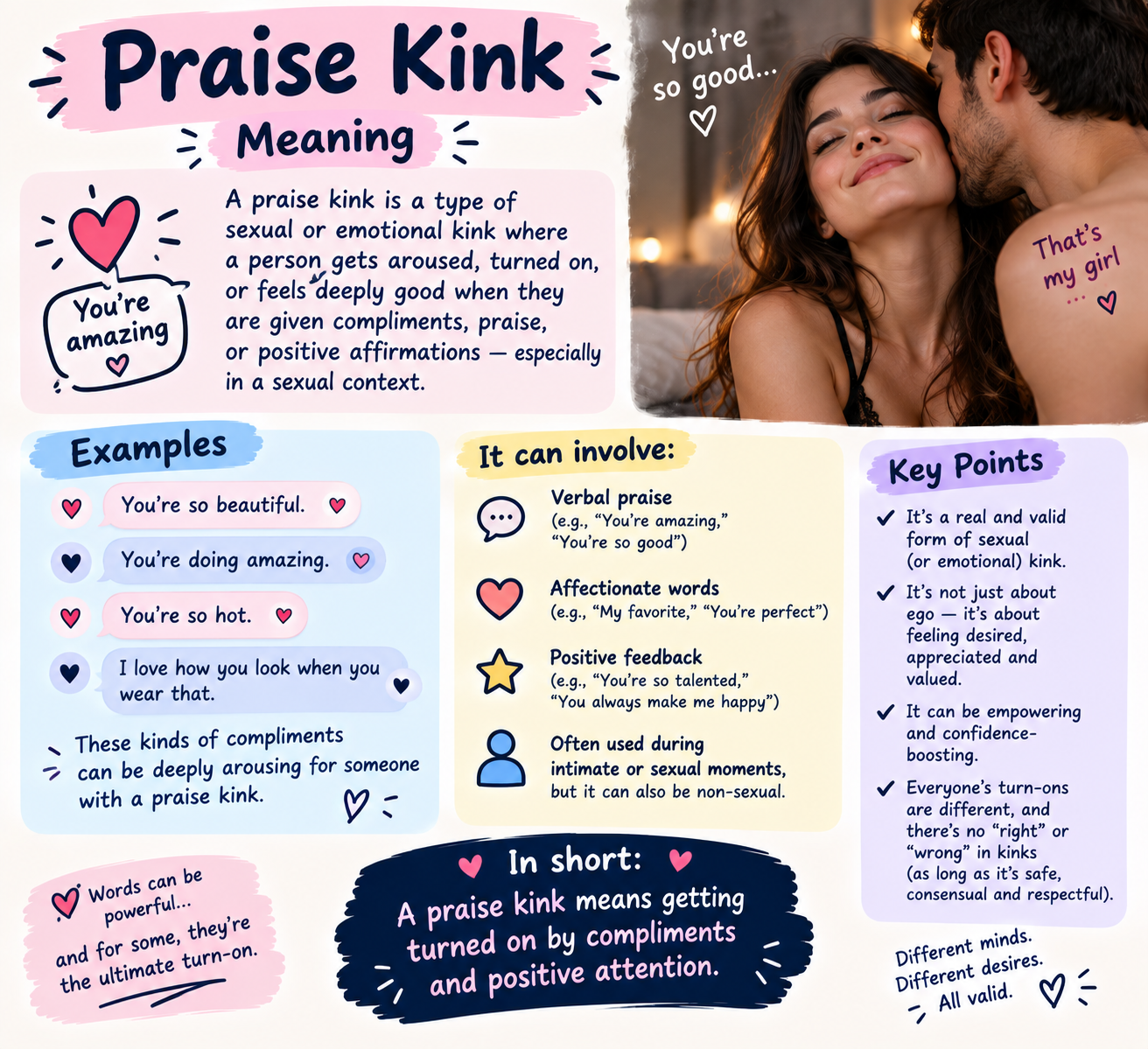
A praise kink is an erotic and emotional orientation where receiving specific, verbal approval triggers intense arousal, deep safety, and psychological satisfaction. Beyond mere flattery, it operates on a conditioned neurological feedback loop where validation replaces traditional power dynamics or physical sensation as the primary driver of intimacy.
Navigating sexual wellness and relationship dynamics often requires cutting through confusing jargon to understand what turns us on—and why. When exploring the praise kink meaning, people frequently mistake it for basic narcissism or low self-esteem. In reality, it represents a precise psychological dynamic centered on vulnerability, positive reinforcement, and emotional attunement.
What Is a Praise Kink? The Core Psychology Explained
At its foundation, a praise kink centers on the intense physical and emotional reaction to verbal affirmation during intimate moments. While everyone appreciates a genuine compliment, someone with a praise kink experiences a heightened neurochemical response—a sudden rush of dopamine and oxytocin—when acknowledged by a partner.
The underlying psychological mechanism relies heavily on positive reinforcement. In traditional BDSM or power exchange dynamics, authority is often asserted through dominance, discipline, or physical restriction. A praise dynamic flips this frame: authority and control are expressed through affirmation, approval, and explicit feedback.
5 Clear Signs You or Your Partner Have a Praise Kink
Understanding whether this dynamic resonates with you comes down to identifying specific behavioral patterns and emotional triggers.
- Heightened Physical Response to Words: Generic physical touch feels significantly more potent when accompanied by specific verbal validation like “You’re doing so well” or “Good girl/boy.”
- Arousal Derived from Approval: The primary engine of intimacy is not physical stimulation alone, but the psychological release of making your partner pleased with you.
- Deep Vulnerability and Emotional Safety: Being praised creates an immediate drop in emotional defense mechanisms, allowing for deeper intimacy and trust.
- Aversion to Negative Reinforcement: Harsh feedback, degradation, or cold distance feels exceptionally dysregulating compared to average baseline responses.
- Craving Post-Intimacy Affirmation: The need for verbal validation extends into communication and aftercare, where debriefing and positive feedback consolidate the experience.
Linguistic and Psychological Breakdown of Praise Dynamics
Why do specific words trigger such a visceral response? The power of praise lies in the intersection of linguistics, power exchange, and attachment theory.
The Role of Power Dynamics
Praise naturally implies an evaluator and an evaluator’s subject. The person giving praise steps into a position of gentle authority, while the person receiving it surrenders the need to control or direct the interaction. This hierarchy creates an emotional release valves for high-stress individuals who spend their daily lives in total control.
Attachment Theory and Safety
For individuals with anxious or hyper-vigilant attachment styles, uncertainty in intimacy creates subtle friction. Explicit verbal praise removes ambiguity. By clearly hearing that they are performing well, satisfying their partner, and staying safe, the hyper-vigilant brain turns off its threat radar and shifts entirely into pleasure.
Praise Dynamics Matrix: Phrasing, Meaning, and Intent
To better understand how different forms of praise function within a relationship, review the breakdown below:
| Praise Type | Example Phrasing | Psychological Vibe | Best Suited For |
| Performance Approval | “You’re doing that so perfectly for me.” | Reassurance, validation, focus | Reducing performance anxiety |
| Identity / Submissive | “Such a good girl / boy / partner.” | Caretaking, authority, surrender | Dominant / submissive power exchange |
| Physical Appreciation | “Look at how beautiful you look right now.” | Presence, aesthetic validation | Building body confidence |
| Efficacy & Impact | “You have no idea what you do to me.” | Empowerment, mutual feedback | Equal, high-arousal intimacy |
Common Pitfalls When Navigating a Praise Kink
Integrating praise into your intimate life seems simple, but missteps can instantly break immersion or cause emotional misalignment.
- Inauthentic or Generic Delivery: Rote repetition of phrases without genuine emotion feels transactional and flat. Praise must be grounded in real-time perception.
- Misinterpreting the Dynamic as Narcissism: Assuming a partner’s need for praise stems from vanity rather than a desire for emotional surrender and safety.
- Ignoring Consent and Pacing: Throwing intense hierarchical praise terms (like “good boy” or “good girl”) into conversation without prior discussion can trigger discomfort rather than pleasure.
- Neglecting Aftercare: Leaving the dynamic abruptly without bringing the partner back to a neutral, equal baseline can lead to a sudden emotional drop.
A Practical Framework for Communicating Your Needs
If you want to introduce a praise dynamic into your relationship, avoid putting your partner on the spot during intimacy. Follow this simple framework to set the stage cleanly:
- Define Your Needs Out of the Bedroom: Choose a relaxed, non-sexual environment to express what language turns you on and why it matters to you emotionally.
- Start with Low-Stakes Phrases: Introduce gentle, descriptive compliments during daily moments or light intimacy before moving to explicit power-exchange language.
- Provide Real-Time Feedback: Use positive reinforcement to guide your partner. If a specific phrase land well, let them know afterward.
- Establish Clear Boundaries: Agree on terms that feel empowering and set firm limits on any words that feel patronizing or uncomfortable.
Frequently Asked Questions
Is a praise kink the same thing as having low self-esteem?
No. While people with low self-esteem may seek reassurance, a praise kink is a distinct erotic orientation focused on the psychological release of approval, authority, and emotional attunement during intimacy.
What is the opposite of a praise kink?
The psychological counterpart to a praise kink is degradation or humiliation, where arousal is triggered by edge-play, verbal insults, or powerlessness through negative framing rather than positive reinforcement.
Can you explore praise dynamics without BDSM?
Absolutely. Praise dynamics do not require full BDSM setups, contracts, or extreme power exchange. They can be integrated into mainstream intimate relationships simply through intentional, enthusiastic verbal communication.
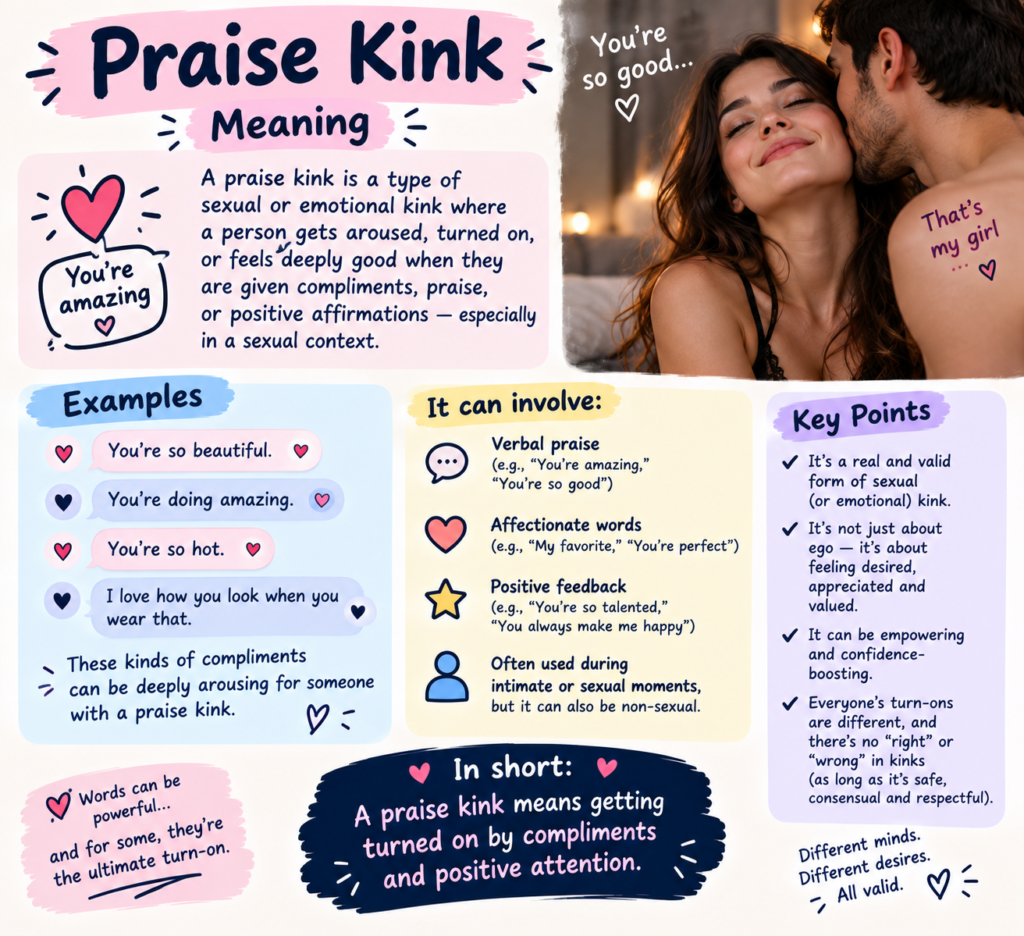
The Golden Rule of Praise Dynamics
Authentic praise is never about performing for approval—it is about using intentional language to build a bridge of absolute safety, mutual focus, and profound emotional surrender.
Praise Kink Meaning in English
The praise kink meaning in English refers to a strong enjoyment or attraction toward receiving verbal praise, compliments, encouragement, or positive affirmation in an intimate or romantic context. Someone who enjoys praise may particularly appreciate hearing that they are doing well, are valued, attractive, or appreciated by their partner. The focus is generally on words of approval and emotional affirmation rather than on a specific activity. Like many relationship preferences, the way people experience a praise kink can vary, and clear communication and mutual comfort are important when discussing personal boundaries and preferences.
Praise Kink Meaning Urban Dictionary
The praise kink meaning Urban Dictionary generally refers to an intimate preference involving enjoyment of verbal praise, compliments, encouragement, and positive affirmation. People may use the term when describing an attraction to being praised or making a partner feel appreciated through words of approval. The phrase is commonly discussed in online communities and relationship conversations, although definitions can vary between users and platforms. In general, the term focuses on the emotional or intimate appeal of receiving positive feedback and feeling valued by a partner.
