

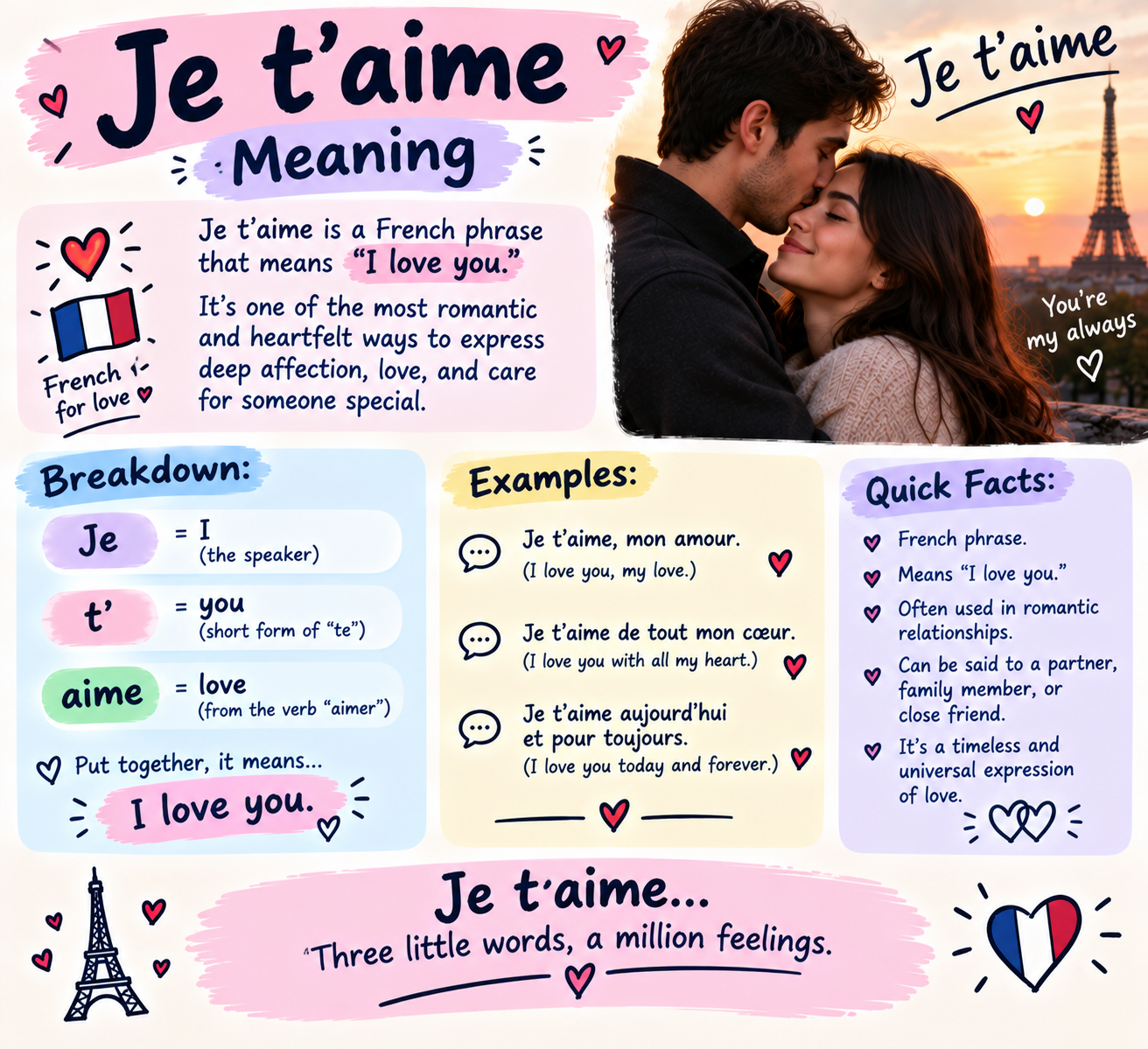
What does Je T’Aime actually mean? Translated directly from French, Je T’Aime means “I love you,” serving as the ultimate expression of deep romantic affection, devotion, and profound emotional connection. Beyond its literal translation, the Je T’Aime meaning carries an enduring cultural prestige that turns simple vocabulary into an iconic symbol of luxury, intimacy, and timeless elegance.
Most brand strategy guides treat romantic vocabulary like a superficial gimmick, tossing out basic French phrases without explaining the underlying phonetic power or consumer psychology. Understanding romantic French expressions requires looking deeper than mere translation—you must master how emotional resonance influences brand perception, audience retention, and global appeal.
When founders align their product story with a authentic emotional trigger, they transform a standard business offering into an unforgettable brand experience.
Categorized Name Concepts Inspired by Romantic Expressions
Grouping name concepts by strategic tone allows you to match phonetic resonance with your target audience’s specific expectations.
Modern & Minimalist
- Jetaime | Sleek, direct, intimate | Luxury beauty, modern jewelry
- Aimer | Clean, intentional, soft | Skincare lines, sustainable fashion
- Mon Amour | Classic, affectionate, high-end | Boutique hotels, artisanal confectionery
Aesthetic & Atmospheric
- Toujours | Everlasting, loyal, deep | Bridal couture, fine jewelry
- Chérie | Playful, warm, cherished | Fragrance brands, lifestyle blogs
- Douceur | Gentle, velvety, soothing | Spa retreats, premium silk goods
Catchy & Contemporary
- J’Adore Studio | Bold, passionate, expressive | Creative agencies, digital media
- Petit Amour | Charming, delicate, memorable | Children’s luxury apparel, gifting platforms
- L’Amour Club | Exclusive, lifestyle-driven, vibrant | Premium membership brands, wellness apps
The Linguistic and Naming Psychology Behind Romantic Phonetics
Here’s where most founders get it wrong: they select romantic terms purely for their visual look without evaluating how the sounds behave in the customer’s mind.
The Je T’Aime meaning relies heavily on soft fricatives—specifically the soft “J” (/ʒ/) sound paired with the open “Aime” (/ɛm/). In psychoacoustics, soft vocalic transitions signal safety, elegance, and tactile intimacy, making them uniquely effective for high-margin lifestyle markets.
When consumers encounter French romantic terms, cognitive association triggers feelings of heritage and refinement. This phonetic structure bypasses basic transactional logic and taps directly into aspirational positioning.
Strategic Brand Comparison & Expression Matrix
| Name Expression | Core Meaning / Vibe | Ideal Industry / Brand Fit |
| Je T’Aime | Unconditional love, deep devotion | Fine jewelry, luxury fragrance, high-end bridal |
| Mon Chéri | My darling, intimate warmth | Premium gifting, boutique patisseries, artisan chocolate |
| Toujours | Always, everlasting commitment | Heritage watches, wedding planning platforms, premium skincare |
| J’Adore | I adore, passionate admiration | Designer fashion, cosmetics, luxury editorial media |
Common Pitfalls When Selecting Romantic Names
- Pronunciation Friction: If your primary target market stumbles over French pronunciation, brand recall drops instantly. Keep spellings intuitive or leverage universal terms.
- Trademark Bottlenecks: Popular romantic phrases often face high trademark saturation in common classes like cosmetics or apparel. Always run clearance checks before committing.
- Scaling Limitations: Choosing a name that is overly narrow or hyper-romantic can limit your ability to expand into gender-neutral or utility-driven product lines down the road.
- Over-used Cliches: Relying on uninspired French tropes can make a new brand feel derivative rather than premium. Aim for subtle phonetic twists or modern pairings.
A Step-by-Step Selection Framework
Let’s break it down simply. Follow this strategic pipeline to validate your brand concept:
- Define the Emotional Anchor: Identify whether your brand represents high-lux elegance, playful romance, or modern minimalism.
- Test Vocal Usability: Say the name aloud ten times in everyday conversation. If it feels awkward or requires frequent spelling corrections, refine the structure.
- Check Linguistic Universality: Ensure the expression translates cleanly across your primary export markets without negative slang connotations.
- Verify Domain & Digital Footprint: Secure exact-match or modified
.comdomains and clean social media handles early in the validation process.
Frequently Asked Questions
What is the exact difference between Je T’Aime and Je T’Adore?
While Je T’Aime expresses deep, unconditional love and romantic devotion, Je T’Adore translates to “I adore you” or “I worship you,” carrying a slightly lighter, more enthusiastic, and playful tone in everyday conversational French.
How do romantic expressions affect brand equity?
Romantic expressions evoke immediate sensory associations with luxury, artistry, and emotional connection. This allows brands in beauty, fashion, and lifestyle sectors to justify premium pricing strategies through perceived value.
Can romantic terms work for gender-neutral or masculine brands?
Yes. When paired with modern typography, minimalist structural layouts, and grounded color palettes, romantic terms shift from overly soft aesthetics to bold expressions of craftsmanship, care, and high design.
The 1-Rule Golden Takeaway
A romantic name only creates brand value if the underlying customer experience lives up to the emotional promise made by the language.
Meaning of Je T’aime
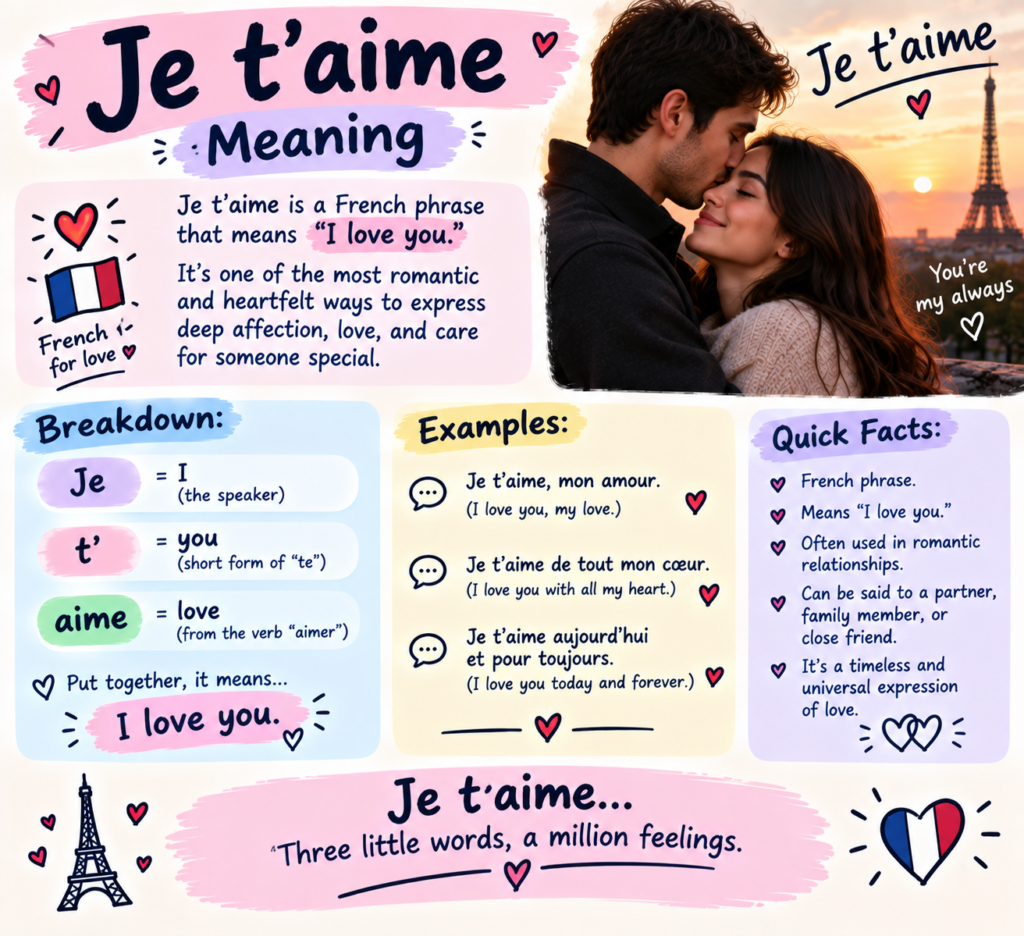
The meaning of je t’aime in English is “I love you.” This French phrase is one of the most familiar ways to express romantic love and deep affection. Je means “I,” while t’aime comes from the verb aimer, meaning “love,” with te referring to the person being addressed. Although the phrase is most commonly used between romantic partners, its meaning and emotional tone can depend on the relationship and context. Because of its simple yet powerful meaning, je t’aime is widely recognized as a classic French expression of love.
Je’ Taime Meaning
The je’ taime meaning is generally understood as “I love you” in English. The standard French spelling is “je t’aime,” and it is one of the most well-known French expressions used to communicate love and affection. Je means “I,” while t’aime expresses “love you” in this phrase. It is most commonly used in romantic relationships, although the emotional meaning can depend on the context and relationship between the people using it. The phrase is widely recognized because of its simple, direct, and affectionate expression of love.
