

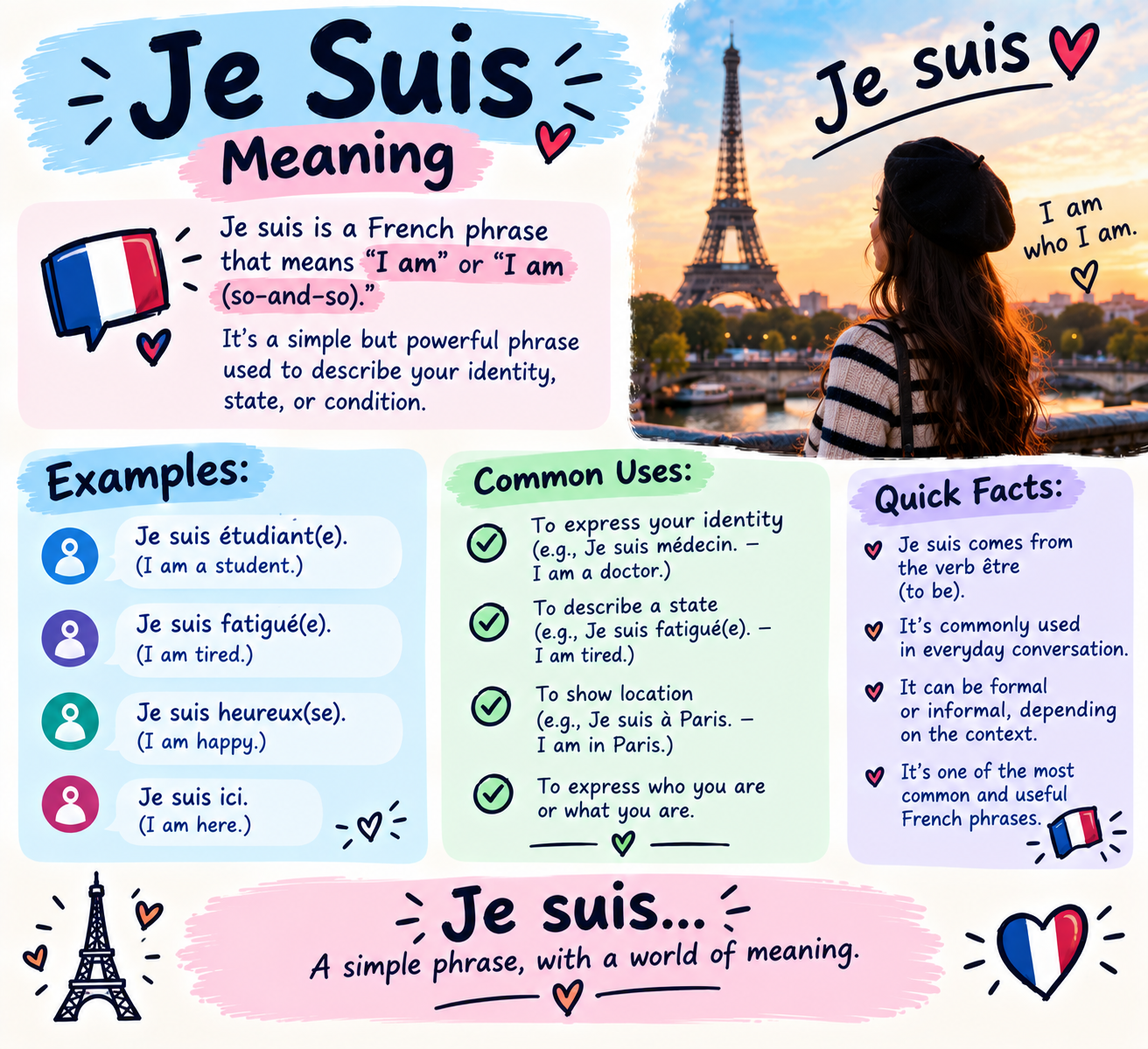
“Je suis” is a French phrase that translates directly to “I am” in English. In brand naming, “Je suis” represents a powerful identity-first naming strategy where a business or product asserts a bold declaration of who they are, instilling immediate emotional resonance, prestige, and authenticity.
Most founders scroll through thousands of generic domain lists searching for a catchy title, only to realize those names lack soul. A successful brand identity needs emotional weight and clarity, which is why Je Suis brand naming has become a go-to framework for modern, luxury, lifestyle, and direct-to-consumer businesses.
Let’s break down why this linguistic structure works, explore curated name concepts, and examine how to apply it to your business.
Categorized “Je Suis” Style Brand Name Ideas
When structuring an identity-focused brand name, you can either keep the literal French phrase or translate its psychological blueprint (“I Am”) into various aesthetic angles.
1. Aesthetic & Modern Identity
- Je Suis Libre | Meaning: “I am free” | Best For: Sustainable fashion, eco-resorts, outdoor lifestyle brands.
- Je Suis Pure | Meaning: “I am pure” | Best For: Clean skincare, organic wellness, minimalist cosmetics.
- I Am Nouveau | Meaning: “I am new/fresh” | Best For: Next-gen tech startups, modern interior design studios.
2. Bold & Luxury Lifestyle
- Je Suis Elite | Meaning: “I am elite” | Best For: High-end concierge services, private wealth management, luxury apparel.
- Je Suis Noir | Meaning: “I am dark/mysterious” | Best For: High-fashion houses, boutique fragrance brands, upscale nightlife lounges.
- I Am Unique | Meaning: “I am singular” | Best For: Bespoke jewelry, custom tailors, high-end artisan goods.
3. Minimalist & Catchy Concepts
- Je Suis Vrai | Meaning: “I am true/real” | Best For: Ethical food brands, transparent supply chain SaaS, authentic media.
- Je Suis Un | Meaning: “I am one” | Best For: Solo-founder platforms, minimalist design systems, boutique fitness studios.
- I Am Sol | Meaning: “I am sun/light” | Best For: Clean energy companies, SPF beauty lines, summer resort wear.
Linguistic & Naming Psychology Breakdown
Here is where most founders get it wrong: they pick a foreign phrase simply because it sounds fancy. Foreign-language naming operates on deep psychological triggers that go far beyond surface aesthetics.
The Power of Identity-First Language
Psychologically, statements starting with “I am” tap into self-actualization. When a consumer purchases from a brand named Je Suis Libre, they are not just buying a product; they are adopting an identity. The name becomes a mirror for the consumer’s aspirations.
The French Phonetic Halo Effect
French is globally perceived as the language of elegance, gastronomy, fashion, and romance. In linguistics, this is known as the Phonetic Halo Effect. Words containing soft fricatives (like the “J” in Je) and smooth vowel transitions convey softness, luxury, and high craft without requiring aggressive marketing copy.
Semantic Search and Entity Recognition
For digital-first brands, using recognized linguistic entities helps search engines and generative AI tools map your brand into specific luxury or lifestyle nodes. Combining Je Suis meaning with targeted industry modifiers gives AI systems a clear semantic signal of your market positioning.
Brand Naming & Meaning Comparison Matrix
| Brand Name Idea | Linguistic Meaning | Emotional Vibe | Ideal Industry Fit |
| Je Suis Soleil | “I am sunshine” | Radiant, warm, optimistic | Skincare, resort wear, wellness |
| Je Suis Force | “I am strength” | Empowered, grounded, bold | Activewear, executive coaching |
| I Am Serein | “I am serene” | Calming, balanced, quiet | Sleep tech, meditation apps, spa |
| Je Suis Envie | “I am desire” | Luxurious, alluring, premium | Lingerie, fine dining, fragrance |
| Je Suis Clair | “I am clear” | Transparent, sharp, simple | FinTech, clean beauty, analytics |
Common Pitfalls When Selecting “Je Suis” Style Names
No jargon, just facts: identity-first French naming comes with specific friction points you must navigate before committing to a trademark.
- Pronunciation Friction: If your primary audience cannot pronounce the name on a podcast or in conversation, word-of-mouth marketing drops significantly. Test how native English speakers pronounce the name before finalizing it.
- Spelling Ambiguity: French silent letters can cause web traffic leaks. If customers type your URL phonetically instead of correctly, you will lose organic traffic to dead ends or competitors.
- Generic Trademark Bottlenecks: Highly common French phrases like Je Suis Belle may face trademark saturation. Aim for unique pairings that combine classic French identity structures with distinctive secondary terms.
- Geographic Over-Indexing: If your brand has no connection to French craft, aesthetics, or European design philosophy, using a French name can sometimes feel mismatched to your core story.
Strategic Selection Framework
To filter and validate your brand name from initial brainstorming to launch, follow this four-step strategy:
- Test the Phonetic Flow: Read the name aloud ten times inside a full sentence (e.g., “Welcome to Je Suis…”). Ensure there is no awkward mouth-feel or phonetic confusion.
- Audit the Digital Footprint: Search for exact-match
.comoptions, social media handles, and existing live entities. Aim for clean handles across major platforms. - Verify Cross-Cultural Meaning: Ensure the chosen phrase does not carry unintended slang connotations in key international markets.
- Conduct Trademark Screening: Perform an initial search on the USPTO (or your local intellectual property register) to confirm the name is clear within your specific commercial class.
Frequently Asked Questions
What does “Je suis” literally mean in French?
“Je suis” literally translates to “I am” in English. It is the first-person singular present tense conjugation of the French verb être (to be).
Why do luxury brands use French names?
Luxury brands use French names because French phonetics naturally trigger association with heritage, high fashion, fine dining, and artisanal craftsmanship—an effect known as country-of-origin positioning.
How do I optimize a “Je Suis” brand name for SEO and domain availability?
To optimize a Je Suis brand naming strategy, pair the core identity phrase with a distinct, brandable noun or modifier. This improves domain availability, creates a unique trademark, and helps generative AI search engines categorize your brand accurately.
The 1-Rule Golden Takeaway
A great name doesn’t just describe what your company sells; it declares who your customer becomes when they choose you.
Je Suis Prest Meaning
The je suis prest meaning is “I am ready” or “I am prepared” in English. The phrase comes from French, although “prest” is an older spelling of the modern French word prêt. Today, the expression is best recognized through its historical and cultural use, particularly in the motto “Je suis prest,” which conveys a sense of readiness and preparedness. Depending on the context, it can communicate that someone is prepared to act, respond, or face a situation. Its historical spelling also gives the phrase a distinctive connection to older forms of French.
Je Suis Prest Means
The phrase je suis prest means “I am ready” or “I am prepared” in English. Je suis translates to “I am,” while prest is an older form of the modern French word prêt, meaning “ready” or “prepared.” The expression is particularly associated with historical French and is often recognized as a motto expressing readiness to act or face a challenge. Although modern French generally uses je suis prêt for a male speaker or je suis prête for a female speaker, the older spelling “Je suis prest” continues to appear in historical and cultural contexts.
